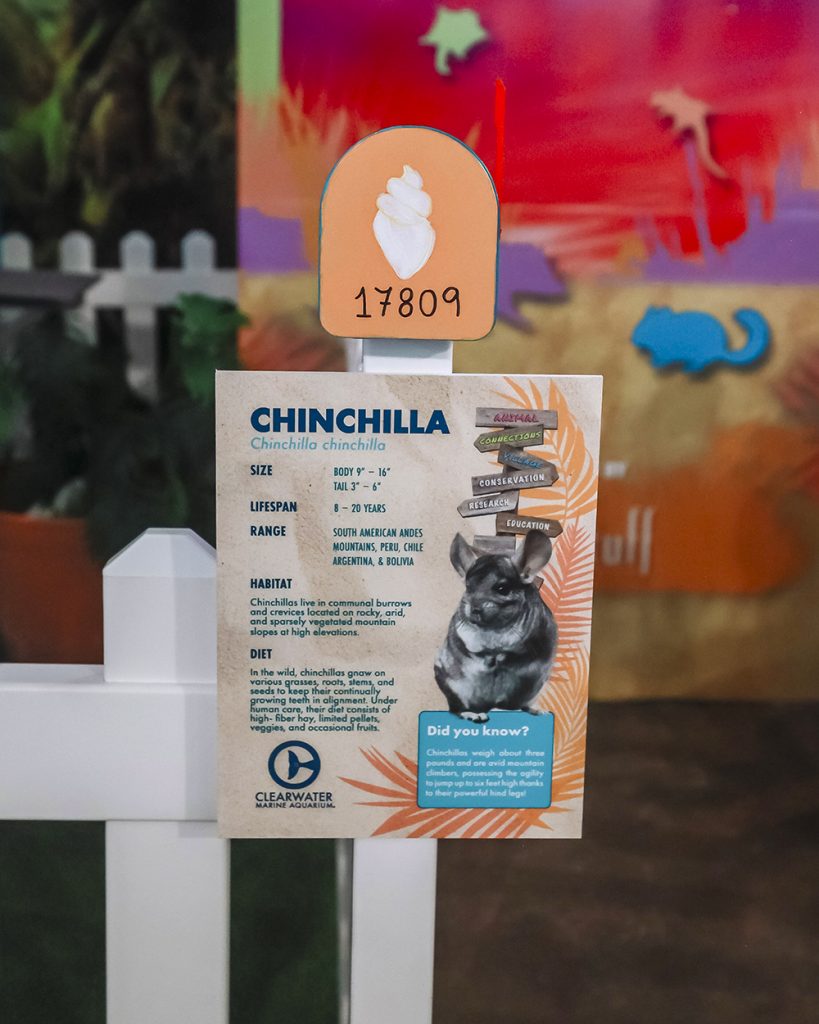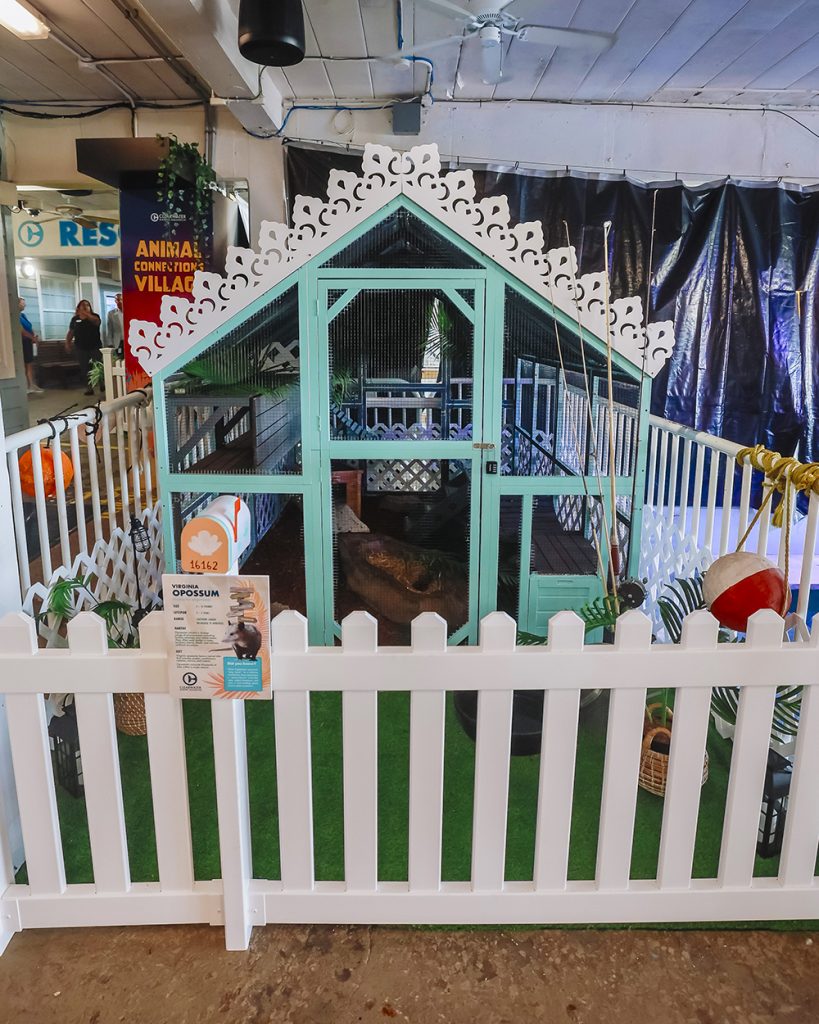
Welcome to the neighborhood! Animal Connections Village is a charming habitat located on Level 2 of the original aquarium. Complete with tiny fences and mailboxes, this community is home to several of our rescued mammal residents, including opossums, chinchillas, and sugar gliders. Stop by and learn about their unique stories and our ongoing rescue efforts!
Presented by Puff ‘n Stuff Catering
Exhibit Details
- Species in this Area
- Sugar Gliders, Chinchilla, Red-Footed Tortoises, Tropical Birds
- Location
- Level 1 Original CMA – Atlantis Theater
*Current animals in exhibit may vary.
Explore the Exhibit
Mammal Species
Sugar Glider
- AVERAGE SIZE
- 4-5 oz.
- HABITAT
- Eucalyptus and acacia forests
- DIET
- Fruit, fresh vegetables and protein
- RANGE
- Eastern Australia, Northern Australia, and New Guinea
Long-Tailed Chincilla
- AVERAGE SIZE
- 13–17 oz
- HABITAT
- Rocky, barren slopes of the Andes Mountains
- DIET
- Grasses, seeds, succulents, insects
- RANGE
- Andes Mountains in northern Chile
Reptile Species
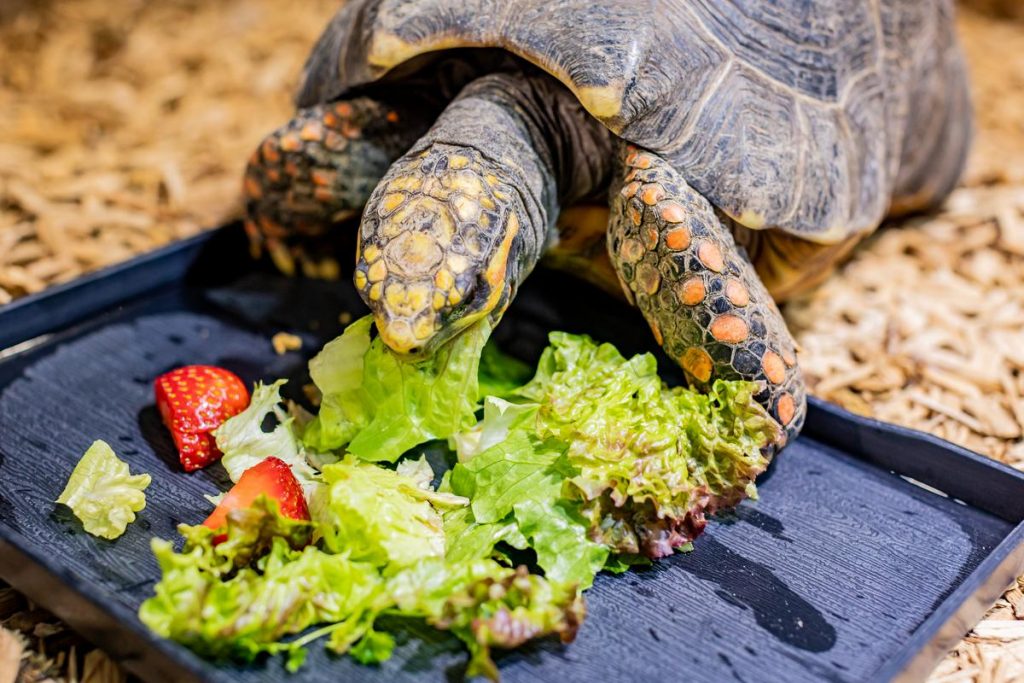
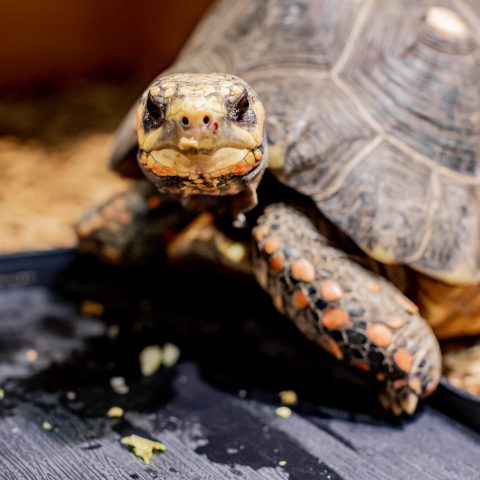
Red-Footed Tortoise
- Average Size
- 13.5 In
- Location
- South America and Caribbean Islands
- Habitat
- Dry and wet forests, grasslands, and savannas
- Diet
- Small invertebrates, leaves, grasses, fungi, fruit, flowers
Tropical Bird Species
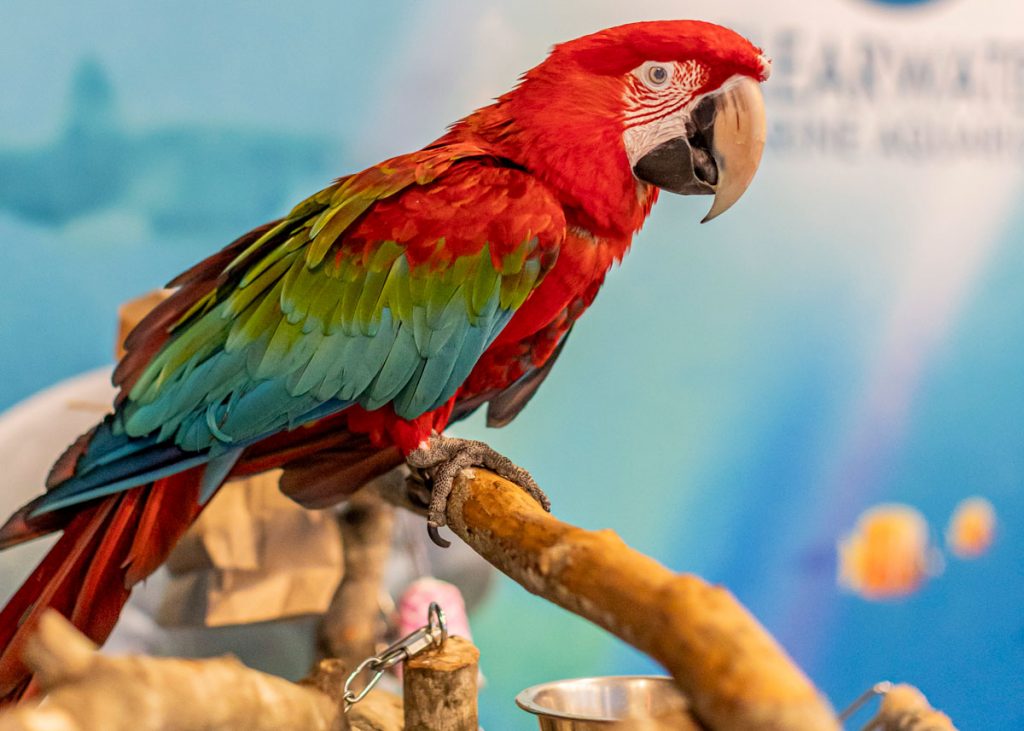
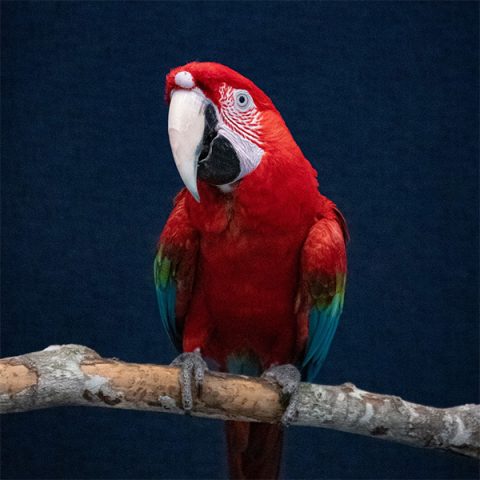
Green-Winged Macaw
- Status
- Least concern
- Average Size
- 36 in
- Location
- Northern and central South America
- Threats
- Deforestation, logging, agricultural expansion
The Green-winged Macaw is a colorful resident of the tropical canopy, easily recognized by its deep crimson plumage and forest-green bands across its wings. Despite their powerful, bone-crushing beaks, these “gentle giants” are known for having a more sensitive and social temperament compared to other large macaws. In the wild, they play a vital role in their ecosystem by dispersing seeds across the sprawling rainforests of South America. Stop by and meet our resident Green-winged Macaw, Big Bird, on your next visit to Clearwater Marine Aquarium!
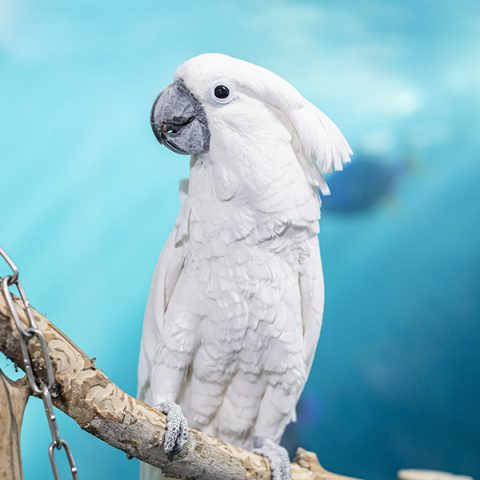
Umbrella Cockatoo
- Status
- Endangered
- Average Size
- 18 in
- Location
- Northern and Central Moluccas of Indonesia
- Threats
- Deforestation, illegal trade
The Umbrella Cockatoo, also known as the White Cockatoo, is a strikingly beautiful bird native to Indonesia, famous for its impressive semi-circular head crest. As one of the most affectionate and social tropical bird species, these intelligent parrots are beloved by enthusiasts for their expressive personalities and brilliant white plumage. Visitors to Clearwater Marine Aquarium will love observing our resident Umbrella Cockatoo, Skipper, display his iconic “umbrella” when he’s in an excited mood.
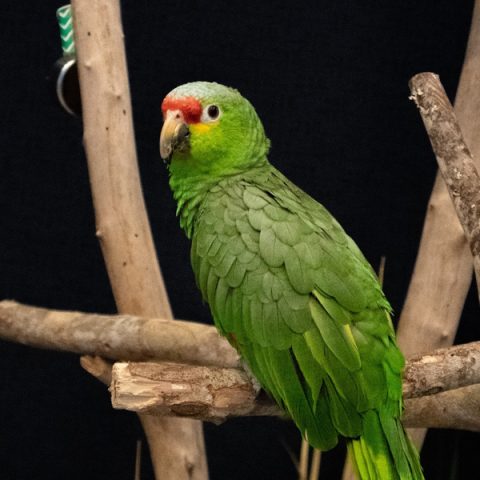
Red-Lored Amazon
- Status
- Least Concern
- Average Size
- 13 in
- Location
- Central and South America
- Threats
- Deforestation, illegal trade
The Red-lored Amazon is a vibrant, highly intelligent parrot easily identified by its striking red brow, green feathers, and lilac crown. In the wild, these charismatic parrots are known for their “dawn and dusk” choruses and their remarkable ability to navigate the dense canopies of Central and South America in devoted, lifelong pairs. Be sure to visit Clearwater Marine Aquarium’s local resident, Mr. Thumbs, to witness his playful personality and talents firsthand!
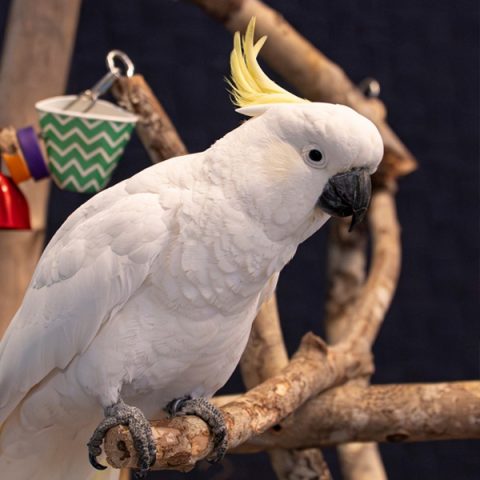
Greater Sulfur-Crested Cockatoo
- Status
- Least concern
- Average Size
- 20 in
- Location
- Australia, New Guinea, Indonesia
- Threats
- Deforestation, illegal trade, poaching, disease
The Greater Sulphur-Crested Cockatoo is the “loudspeaker” of the Australian outback and New Guinea forests. They are famous for their dramatic, sulfur-yellow crest that fans out when they are excited or alarmed. In the wild, they are highly social and synchronized, often seen in massive, snow-white flocks that move with a collective “sentinel” system to keep each other safe from predators. Come witness their incredible personality and intelligence by meeting Clearwater Marine Aquarium’s local resident, Powder!