
Echoes of the Ocean: A Marine Life Speaker Series
Join us for a captivating evening as part of Echoes of the Ocean: A Marine Life Speaker Series, an inspiring program designed to spotlight marine science, conservation, and the ongoing mission of rescue, rehabilitation, and release at Clearwater Marine Aquarium. This series features distinguished voices in marine research and ocean advocacy, offering guests a unique opportunity to connect with leaders shaping the future of our oceans.
There are no upcoming talks scheduled. Stay tuned for updates!
Recent Talks:
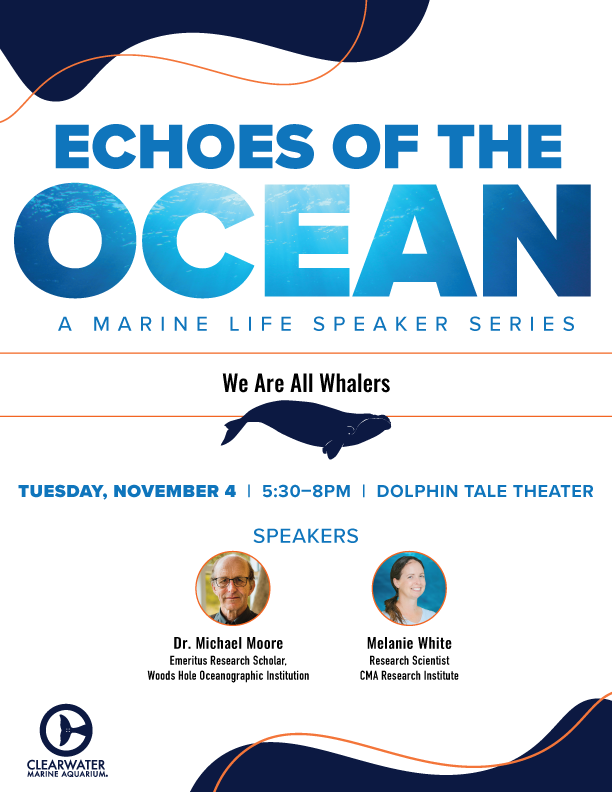
We Are All Whalers
Tuesday, November 4, 2025
Clearwater Marine Aquarium | Dolphin Tale Theater
Dr. Michael Moore, renowned veterinary scientist and right whale expert from Woods Hole Oceanographic Institution, will share insights from his powerful book “We are All Whalers,” which reveals the hidden ways our everyday choices impact the survival of North Atlantic right whales and other marine life. Drawing on over 30 years of research in marine mammal health, Dr. Moore challenges audiences to recognize their shared responsibility in protecting whales and offers practical actions we can all take to ensure their future.
- 5:30 pm
-
Doors Open
4th Level Dolphin Tale Theater
- 6:00 pm
-
Speaker Session
4th Level Dolphin Tale Theater
- 7:30 pm
-
Q&A Session
4th Level Dolphin Tale Theater
Tickets
- General Admission
- $30
- Students (Ages 8+)
- $20
- Government Employees
- $25
- Members
- 10% OFF
Limited ticket availability. Advanced reservations are highly encouraged.
Ticket pricing is subject to change.
Topics & Speakers
We Are All Whalers
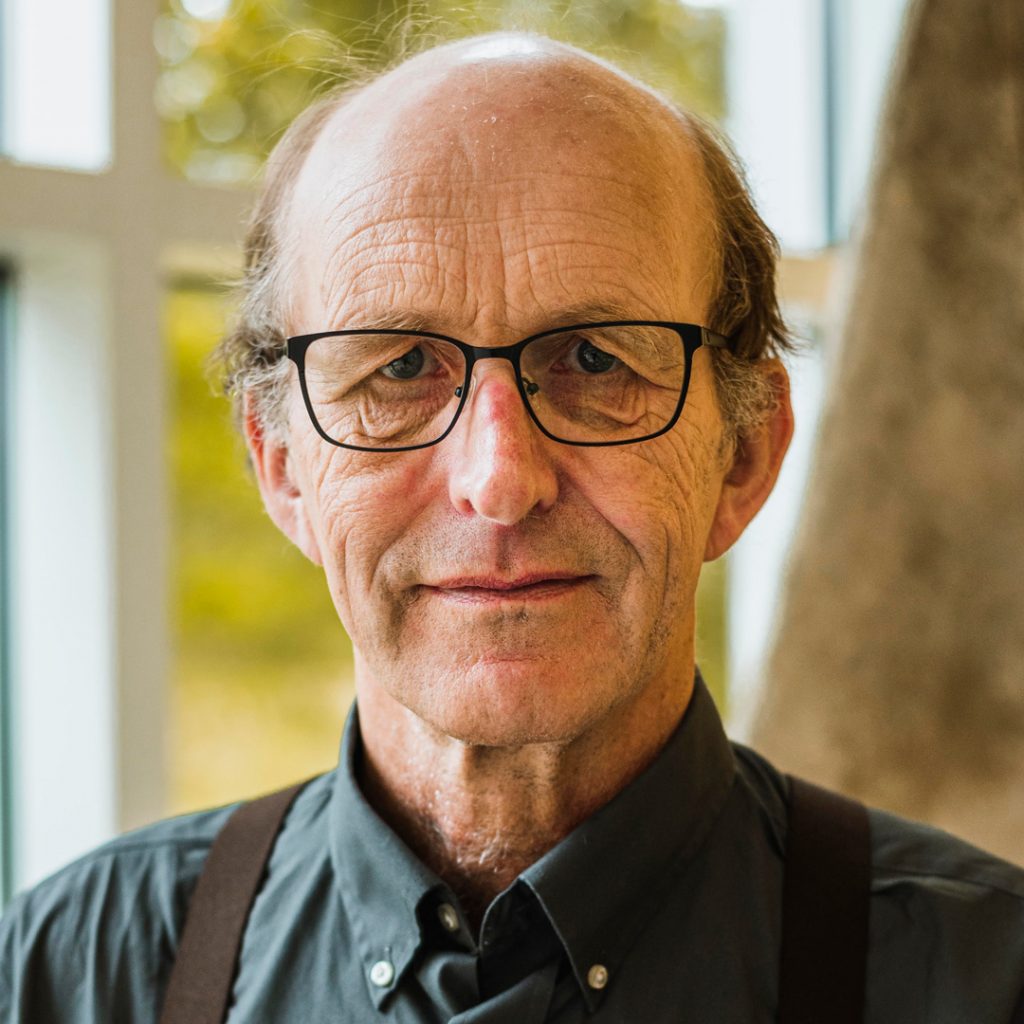
Dr. Michael J. Moore
Emeritus Research Scholar, Woods Hole Oceanographic Institution
Dr. Michael J. Moore is a veterinary scientist and emeritus research scholar, at the Woods Hole Oceanographic Institution, where he has spent over three decades studying marine mammal health, particularly the North Atlantic right whale. With a background in veterinary medicine from the University of Cambridge and a Ph.D. from the Massachusetts Institute of Technology–Woods Hole Oceanographic Institution Joint Program, Moore brings a unique blend of clinical expertise and ecological insight to his work. He is a leading voice in whale conservation, known for his research on whale entanglement, necropsies, and advocacy for policy changes to protect endangered marine species. More info: https://www2.whoi.edu/staff/mmoore/
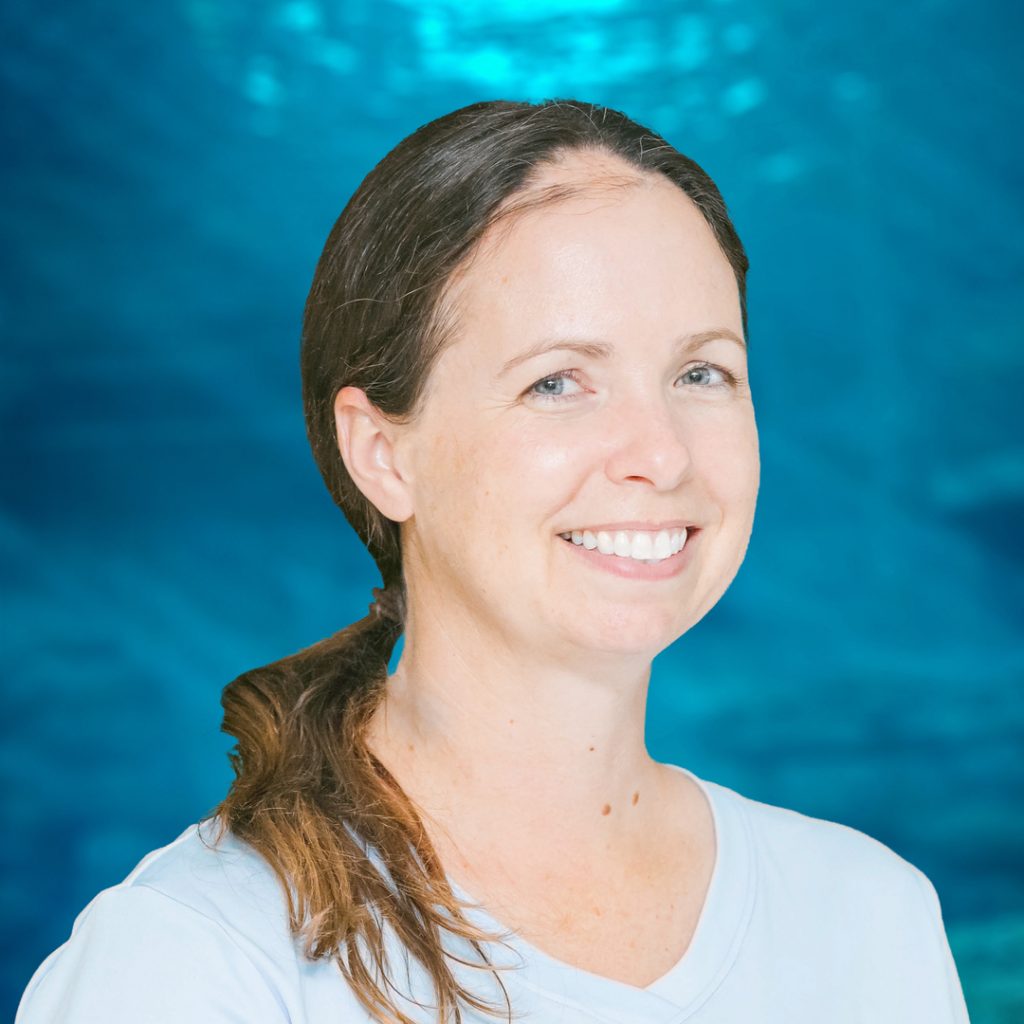
Melanie White
Director of North Atlantic Right Whale Conservation Project, Research Biologist, Clearwater Marine Aquarium Research Institute
Melanie White is the CMARI project manager for the North Atlantic right whale conservation program. She manages three field teams that conduct aerial surveys on the only known calving grounds for this critically endangered species. Each winter, Melanie is based in Saint Simons Island, Georgia where she participates in survey flights off the coast of Georgia and northeast Florida.
Melanie has been flying North Atlantic right whale surveys since December 2005 and has been based in Florida, South Carolina and Georgia. She works as an observer, survey coordinator and field supervisor monitoring the location, individual identification and real-time vessel mitigation for right whales.
Melanie grew up in upstate New York surrounded by lakes and forests, so her love for the ocean only surfaced thanks to a family trip to Acadia National Park, Maine. The variety of marine creatures found in countless tide pools captivated her and triggered the start of her fascination to learn about the world below the vast ocean’s surface. She is a graduate from Ursinus College, Pennsylvania and holds a B.S. in Biology.
Melanie has spent time studying large whales on both coasts. She has monitored the gray whale population in British Columbia, Canada and now spends her time in both the northern and southern sectors of the U.S. eastern seaboard. During the summer Melanie can be found on the whale watching vessel, M/V Granite State, in Rye, New Hampshire where she works as a naturalist and research associate with the Blue Ocean Society for Marine Conservation. Melanie then heads south in the winter coordinating right whale aerial surveys for the CMA Research Institute each calving season.
When she is not in the field searching for whales, Melanie tends to gravitate to the environment surrounding her. She enjoys hiking, aquatic birding, searching for treasures on the beach and nature photography.
Lessons from 55 Years of Studying Dolphins on Florida’s West Coast
Tuesday, September 16, 2025
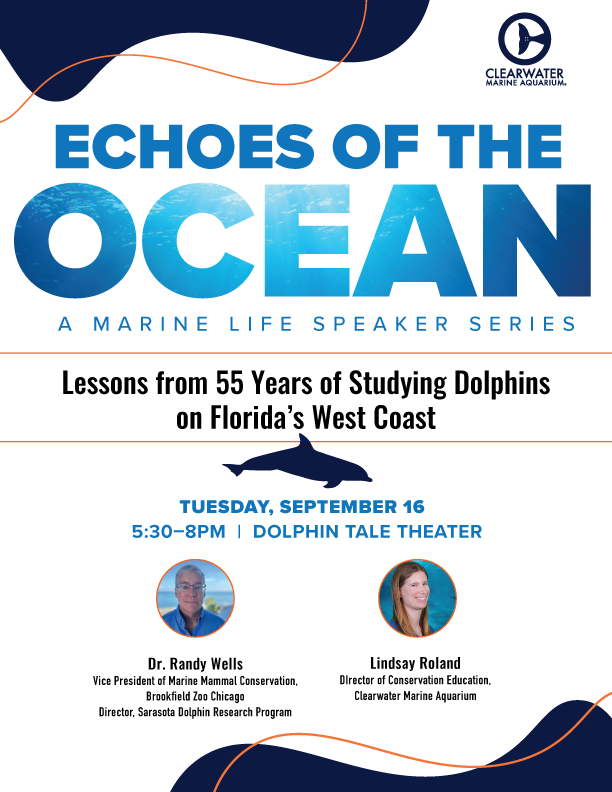
Join us for a talk with Dr. Randall Wells, Director of the Sarasota Dolphin Research Program—the world’s longest-running study of wild dolphins. For over 50 years, Dr. Wells has led groundbreaking research on dolphin behavior, health, and survival, from the impacts of boat traffic and red tides in Florida to efforts to protect the endangered vaquita in Mexico. A global leader in marine mammal science and conservation, Dr. Wells brings unmatched insights into the lives of dolphins and the challenges they face in today’s oceans.
Lessons from 55 Years of Studying Dolphins on Florida’s West Coast
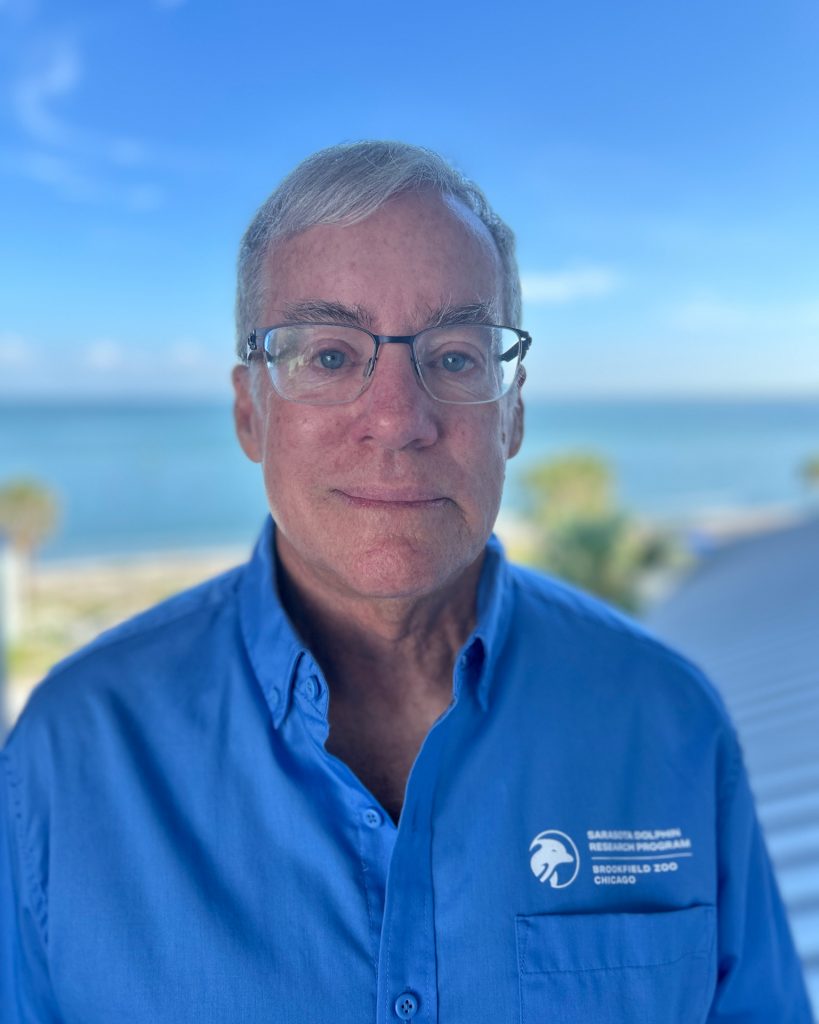
Dr. Randy Wells
Vice President of Marine Mammal Conservation, Brookfield Zoo Chicago
Director, Sarasota Dolphin Research Program
Randall Wells directs the Sarasota Dolphin Research Program, the world’s longest-running dolphin conservation research program. He began studying bottlenose dolphins in Sarasota Bay, Florida, as a high school volunteer at Mote Marine Laboratory in 1970, engaging in behavioral studies of shark-dolphin behavioral interactions as well as dolphin tagging. Wells received his Bachelor’s degree in Zoology from the University of South Florida in 1975, his Masters in Zoology from the University of Florida in 1978, and his PhD in Biology from the University of California, Santa Cruz in 1986. He was awarded a post-doctoral fellowship with Woods Hole Oceanographic Institution in 1987. He has worked with Brookfield Zoo Chicago since 1989, where he is Vice President of Marine Mammal Conservation. Wells is a Professor of Ocean Sciences (adjunct) at the University of California, Santa Cruz, and Professor of Marine Mammal Science (adjunct) at the University of Florida’s College of Veterinary Medicine, through which he supervises masters and doctoral students.
Wells’ current research program uses a collaborative approach to examine the behavior, social structure, life history, ecology, health, and population biology of bottlenose dolphins along the central west coast of Florida, with studies focusing on up to five concurrent generations of a locally resident ~170-member dolphin community. Recent research topics include the effects of human activities on coastal dolphins, such as boat traffic, fishing activities, human feeding of wild dolphins, and pollution, and the impacts of other environmental disturbances such as red tides. Wells has been involved in the development, refining, attachment, testing, and deployment of dolphin tags, including telemetry tags, since 1970. Wells has served as principal (PI) or co-PI for more than 250 funded marine mammal research projects. He has led or been a PI for bottlenose dolphin health assessment projects in Sarasota Bay, FL, over the West Florida Shelf, Beaufort, NC, St. Joseph Bay, FL, Brunswick, GA, Mississippi Sound, Barataria Bay, LA, and Bermuda.
In addition to bottlenose dolphin research, Wells has engaged in surveys to define the distribution of the highly endangered vaquita in the Gulf of California, studies of the behavior of: spinner and pantropical spotted dolphins in Hawaii, Guiana dolphins in Brazil, Atlantic spotted and bottlenose dolphins over the West Florida Shelf, blue, gray, and humpback whales, ranging, social, and dive patterns of franciscanas off Argentina and Brazil, the effects of industrial activities on bowhead whales in the Beaufort Sea, the impacts of boat traffic on manatees in Florida and Belize, and the reintroduction and/or follow-up tracking of captive, rescued, and rehabilitated bottlenose, Risso’s, Guiana, Atlantic spotted, and rough-toothed dolphins, and short-finned pilot, pygmy killer, and melon-headed whales back into their native waters. He has participated in conservation consultations on: baiji and finless porpoises in China, Indo-Pacific bottlenose dolphins in the Solomon Islands, Chinese white dolphins off Hong Kong and Taiwan, vaquitas in Mexico, and Mekong River dolphins in Cambodia.
Wells has authored/co-authored 4 books and more than 340 peer-reviewed journal articles and book chapters. He has been presenter or co-author of more than 845 presentations at professional meetings or invited public or university lectures. He has advised/co-advised or provided resources for more than 100 graduate students, and more than 500 undergraduate interns have been trained through the Sarasota Dolphin Research Program. Wells was President of the Society for Marine Mammalogy during 2010-2012, serves on the Board of Editors and Conservation Committee, and received the society’s Kenneth S. Norris Lifetime Achievement Award in 2022. Wells also serves on the Committee of Scientific Advisors on Marine Mammals for the U.S. Marine Mammal Commission. He is the past-chair of the NOAA/USFWS Atlantic Scientific Review Group and the NOAA/USFWS Working Group on Marine Mammal Unusual Mortality Events. Wells serves on IUCN’s Cetacean Specialist Group, and on the Steering Group for the U.S. Animal Telemetry Network. After more than 50 years, he still gets a thrill out of observing dolphins in the wild.
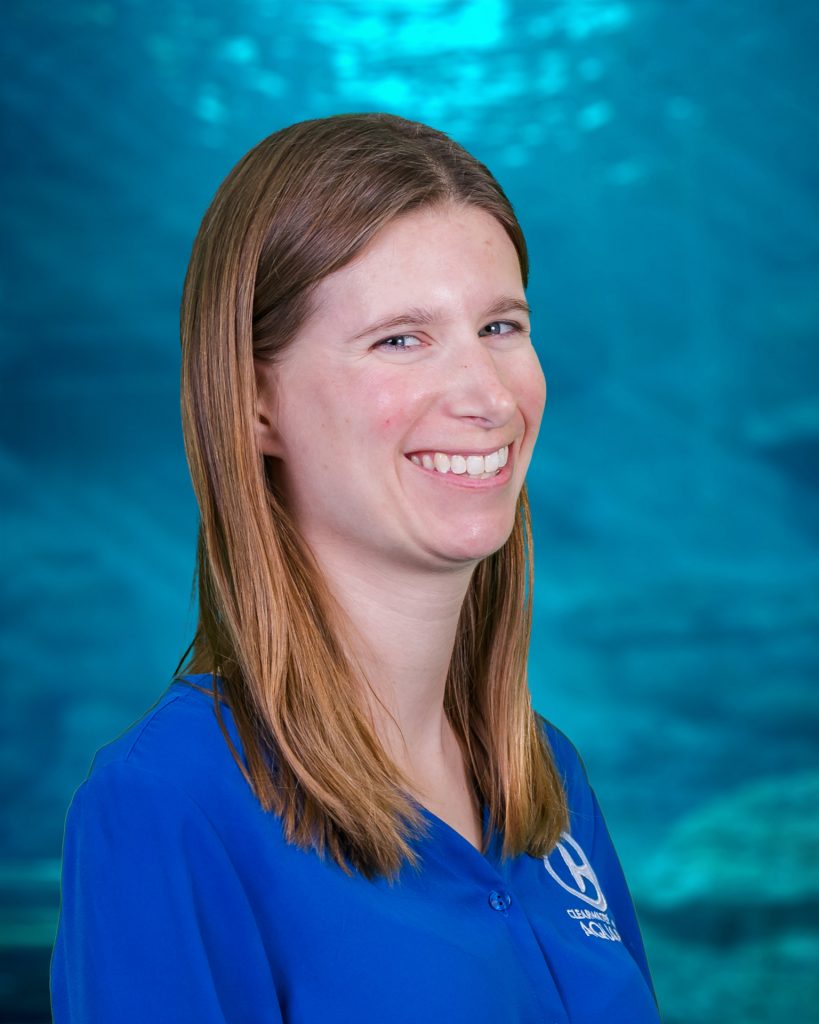
Lindsay Roland, M.S.
Director of Conservation Education, Clearwater Marine Aquarium
Lindsay Roland is the Director of Conservation Education at Clearwater Marine Aquarium, where she oversees the educational eco-boat tours, summer camps, and educational programming. She also serves as the principal investigator on Clearwater Marine Aquarium’s NOAA-permitted dolphin photo-identification study. Lindsay graduated from Furman University with a degree in Biology and then went on to complete her Master’s Degree in Marine Science at Jacksonville University where she conducted her thesis research on the synchronous swimming of bottlenose dolphins. Before joining the Clearwater Marine Aquarium Education team in 2015, she gained valuable experience at both Dolphin Research Center and Mote Marine Laboratory. She enjoys being able to share her passion for dolphin research and marine conservation to inspire guests of all ages about the incredible world of marine science.
An Evening With Dr. Sylvia Earle
Tuesday, May 20, 2025
Clearwater Marine Aquarium | Dolphin Tale Theater
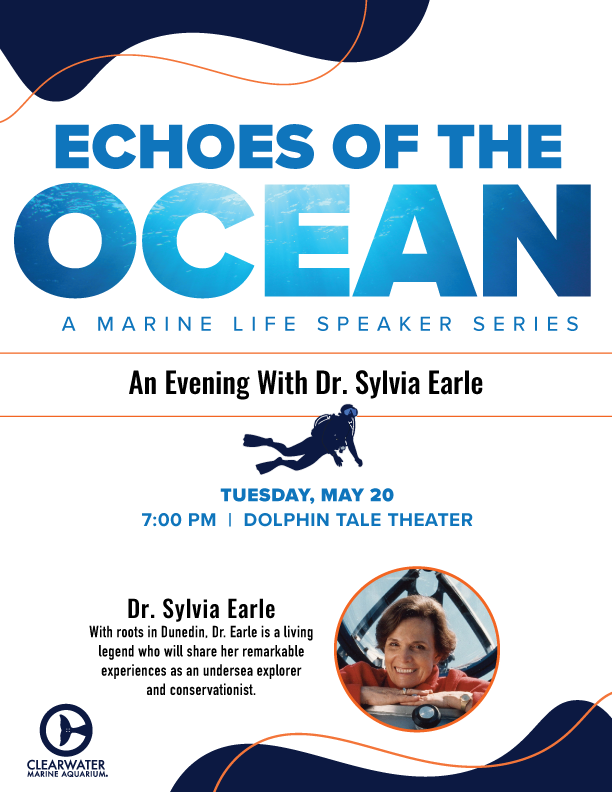
Our upcoming speaker is none other than Dr. Sylvia Earle, National Geographic’s Explorer at Large. With more than six decades of groundbreaking exploration, Dr. Earle has led over 100 expeditions, authored more than 240 publications, and spent thousands of hours beneath the surface advocating for our blue planet. She is the founder of Mission Blue, a National Geographic Society Explorer in Residence, and former Chief Scientist of NOAA. Dr. Earle’s work has earned her Time Magazine’s title of “Hero for the Planet”, a Library of Congress Living Legend designation, and the TED Prize, among many other global honors.
This exclusive event will take place in CMA’s Dolphin Tale Theater on the fourth floor, where guests will also enjoy access to our ArtSEA Conservation exhibit space before and after the presentation.
An Evening With Dr. Sylvia Earle
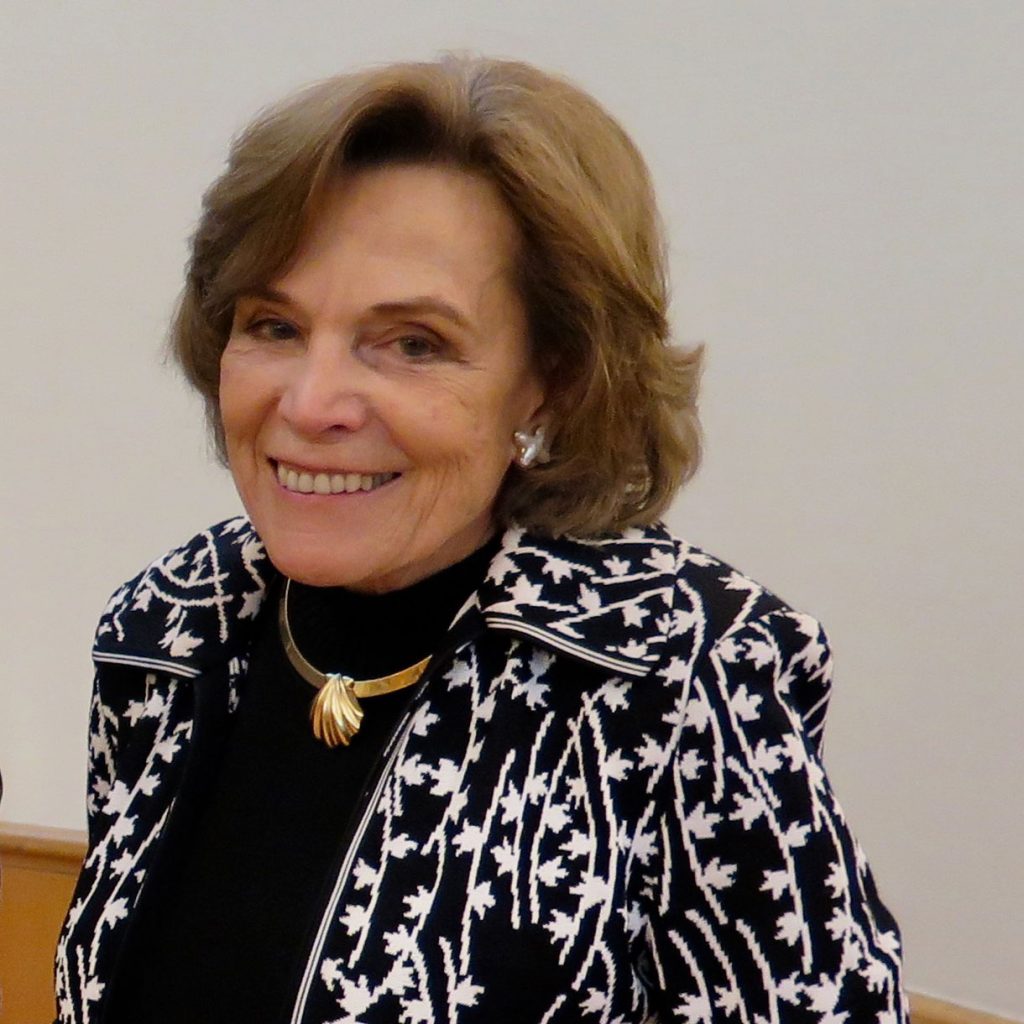
Dr. Sylvia Earle
National Geographic’s Explorer at Large
National Geographic Society Explorer in Residence Dr. Sylvia A. Earle, called Her Deepness by the New Yorker and the New York Times, Living Legend by the Library of Congress, and first Hero for the Planet by Time Magazine, is an oceanographer, explorer, author and lecturer with experience as a field research scientist, government official, and director for corporate and non-profit organizations including the Kerr McGee Corporation, Dresser Industries, Oryx Energy, the Aspen Institute, the Conservation Fund, American Rivers, Mote Marine Laboratory, Duke University Marine Laboratory, Rutgers Institute for Marine Science, the Woods Hole Oceanographic Institution, National Marine Sanctuary Foundation, and Ocean Futures.
Formerly Chief Scientist of NOAA, Dr. Earle is the Founder of Deep Ocean Exploration and Research, Inc. (DOER), Founder of the Sylvia Earle Alliance (S.E.A.) / Mission Blue, Chair of the Advisory Council of the Harte Research Institute, inspiration for the ocean in Google Earth, leader of the NGS Sustainable Seas Expeditions, and the subject of the 2014 Netflix film, Mission Blue. She has a B.S. degree from Florida State University, M.S. and PhD. from Duke University, 27 honorary degrees and has authored more than 200 scientific, technical and popular publications including 13 books (most recently Blue Hope in 2014), lectured in more than 90 countries, and appeared in hundreds of radio and television productions.
She has led more than 100 expeditions and logged more than 7,000 hours underwater including leading the first team of women aquanauts during the Tektite Project in 1970, participating in ten saturation dives, most recently in July 2012, and setting a record for solo diving in 1,000 meters depth. Her research concerns marine ecosystems with special reference to exploration, conservation and the development and use of new technologies for access and effective operations in the deep sea and other remote environments.
Superheroes of Manatee Conservation
Thursday, June 6, 2024 · 5:00 pm to 8:00 pm
We are excited to welcome Superheroes of Manatee Conservation, Dr. James “Buddy” Powell and Jamal Galves, as we explore the ongoing efforts and challenges of protecting these gentle giants. Dr. Powell, one of the world’s leading experts on manatees, will share stories from a lifetime of manatee research, including introducing Jacques Cousteau to the manatees in Crystal River when he was just a teenager.
Jamal Galves was just a young boy in Belize when he met Dr. Powell; he will reminisce about that fateful day, how it led to his passion to protect manatees, and his extraordinary career as the “Manatee Man.”
These two superheroes have worked to protect manatees in the U.S. Caribbean, Central America, and throughout their range; we are excited to bring these efforts to Clearwater Marine Aquarium in our new Manatee Rehabilitation Center. We will hear about this new facility, rehabilitation efforts, and the manatee in our care from CMA’s Manatee Manager, Tanya Ward.
Superheroes of Manatee Conservation
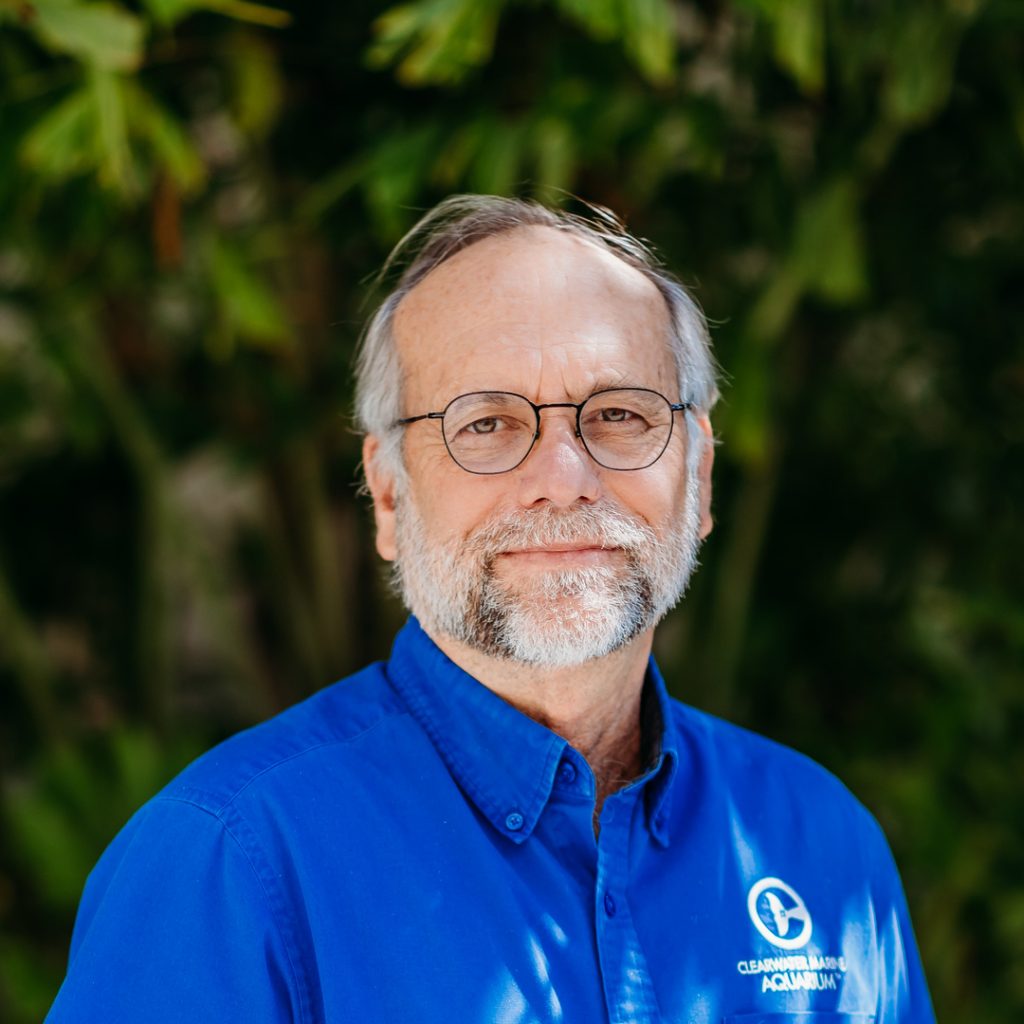
Dr. James “Buddy” Powell
Chief Zoological Officer & Executive Director – Clearwater Marine Aquarium, CMA Research Institute
For more than 40 years, Dr. James “Buddy” Powell has worked to conserve manatees and other endangered species around the world through science and education. With an integrated approach to unlock solutions for conservation issues, his efforts have resulted in coastal protected areas in Florida, West Africa, Central America and Cuba.
As native Floridian in the 1970s, Dr. Powell’s work began with the U.S. Fish & Wildlife Service as a biologist and manatee specialist. In 1986, he moved to West Africa where he studied manatees and forest elephants for the Wildlife Conservation Society (WCS). After a cultural adjustment and gaining experience in managing people and changing human behavior, he was pivotal in establishing several coastal protected areas. He moved to Belize in the 1990s to manage WCS’s Glover’s Reef Marine Research Station. Upon his return to Florida, Dr. Powell administered the state’s research program on marine mammals and sea turtles for the Florida Fish and Wildlife Conservation Commission. In 2001, he became a Vice President at Wildlife Trust where he oversaw the Aquatic and National Divisions.
In 2008, Dr. Powell co-founded Sea to Shore Alliance. The organization was created to improve the health and productivity of coastal environments for the endangered species and human livelihoods that depend on them through research, education and conservation. Dr. Powell joined CMA as VP of Research & Conservation when Sea to Shore Alliance merged with Clearwater Marine Aquarium.
Dr. Powell received his BSc. in Wildlife Biology from the University of Florida, his Masters in Marine Affairs from the University of Washington, and his PhD in Zoology from the University of Cambridge in England. He was the recipient of the prestigious Pew Award in Marine Conservation in 2000, has been featured on “Champions of the Wild” and National Geographic’s “Wild Chronicles” documentaries, and has been honored with multiple awards and certificates. Dr. Powell has authored two books, numerous scientific publications and popular articles.
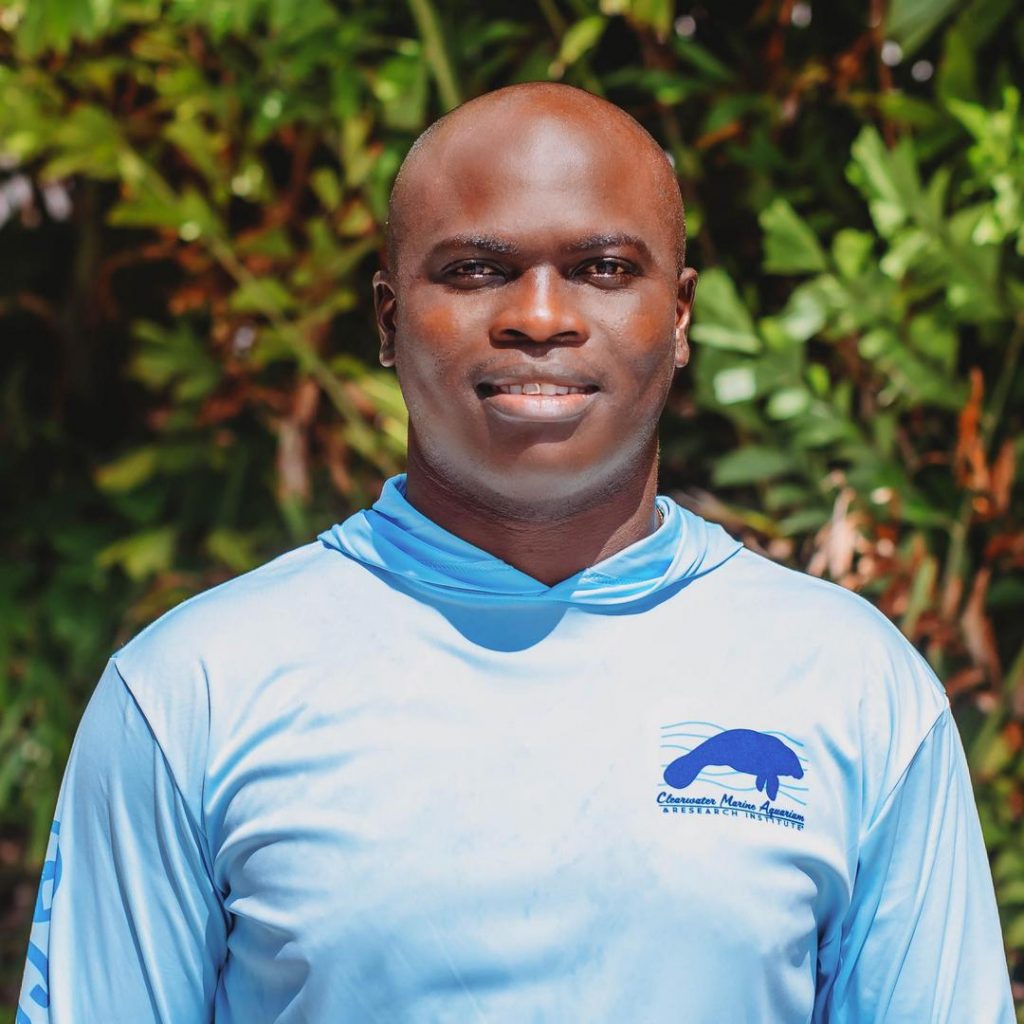
Jamal Galves
“The Real Manatee Man”
Belize Program Coordinator – CMA Research Institute
A native of Belize, Jamal Galves has been passionate about protecting wildlife since childhood. From the age of 12, he knew he wanted to work with animals – specifically manatees.
In 1998, Jamal met Executive Director Dr. James “Buddy” Powell and USGS scientist Robert Bonde while participating in his first manatee health assessment. Working with these two renowned scientists influenced Jamal enormously; he was immediately hooked and soon found himself taking every opportunity to work with manatees. While most of his high school classmates were spending their weekends and holidays relaxing, Jamal was working with scientists, monitoring and feeding two manatees in their final stages of rehabilitation. He eventually helped with the tracking of those two manatees after their release.
After finishing high school, Jamal volunteered to work with Nicole Auil Gomez, an associate with Sea to Shore Alliance, now CMA Research Institute, and was eventually given a full-time position as coordinator of the manatee project., continuing his dream of protecting wildlife. Jamal’s responsibilities include addressing and responding to any manatee related incidents in the entire country of Belize; capturing, tagging, and tracking manatees; collecting data; rescue, release and monitoring of rehabilitated manatees in the wild; and educational outreach and awareness.
Jamal recently was awarded the prestigious Ocean Hero Award by Oceana Belize for his dedicated, passionate and heroic work with the endangered manatee. He has also been presented with the Belize National Hero Award (Meritorious Award” from the Belize Government for his conservation contribution to the country. He have been named a National Geographic Explorer and Natgeo PhotoArk Edge Fellow. “These animals are in trouble and need our help – I have dedicated my life to helping this species,” he said upon accepting the award.
The New Manatee Rehabilitation Center at CMA
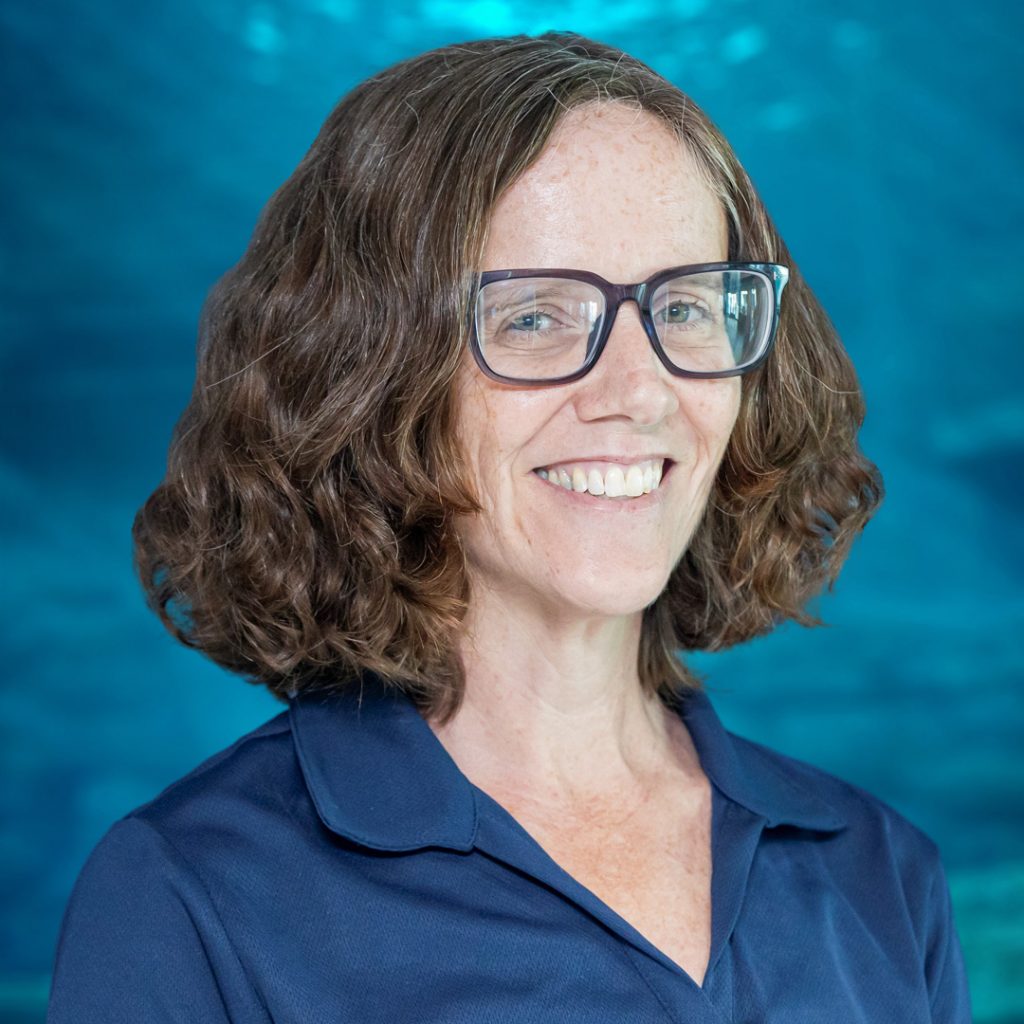
Tanya Ward
Manatee Care Manager – Clearwater Marine Aquarium
Tanya Ward is the Manatee Care Manager at Clearwater Marine Aquarium. Tanya is originally from Virginia and moved to Clearwater Florida in 1999 to pursue her dream of working in the rescue and rehabilitation field with marine mammals. She started her career volunteering at CMA in various departments including the rescue team, the sea turtle department, and the Full Circle Program. This led to a full-time job with the Full Circle Program. A grant-based program working with at-risk youth in an animal- assisted therapy setting. Through volunteer and full-time work at CMA, it led her to Lowry Park Zoo, now known as Zoo Tampa, where she worked in the David A. Straz, Jr. Manatee Hospital for ten years. During that time, she trained under Virginia Edmonds, the current president of the Manatee Rescue & Rehabilitation Partnership (MRP). After ZooTampa, Tanya moved to Colorado in 2013 working at Colorado State University in their Veterinary equine teaching hospital. She returned to Clearwater, Florida in 2014 and began working at Busch Gardens Tampa Bay on the Veldt team, then moved to Edge of Africa where she was the Supervisor over the lions, hyenas, Nile crocodile, ring-tail lemurs and hippos. She continued volunteer work at CMA as a rescue team member upon her return to Florida working with CMARI and CMA on manatee calls as well as other marine life. I am excited to be a part of the new hospital at CMA, working closely with the MRP and continuing to contribute to Clearwater Marine Aquarium’s mission.
Q&A Panelists
- Dr. James “Buddy” Powell – Chief Zoological Officer & Executive Director – CMA/CMARI
- Jamal Galves – Belize Program Coordinator – CMARI
- Monica Ross – Director of Manatee Research & Conservation/ Senior Research Scientist – CMARI
- Dr. Anmari Alvarez Aleman – Caribbean Research Director – CMARI
- Tanya Ward – Manatee Care Manager – CMA
- Martine de Wit, DVM, MS, – Research Scientist at Florida Fish & Wildlife Research Institute
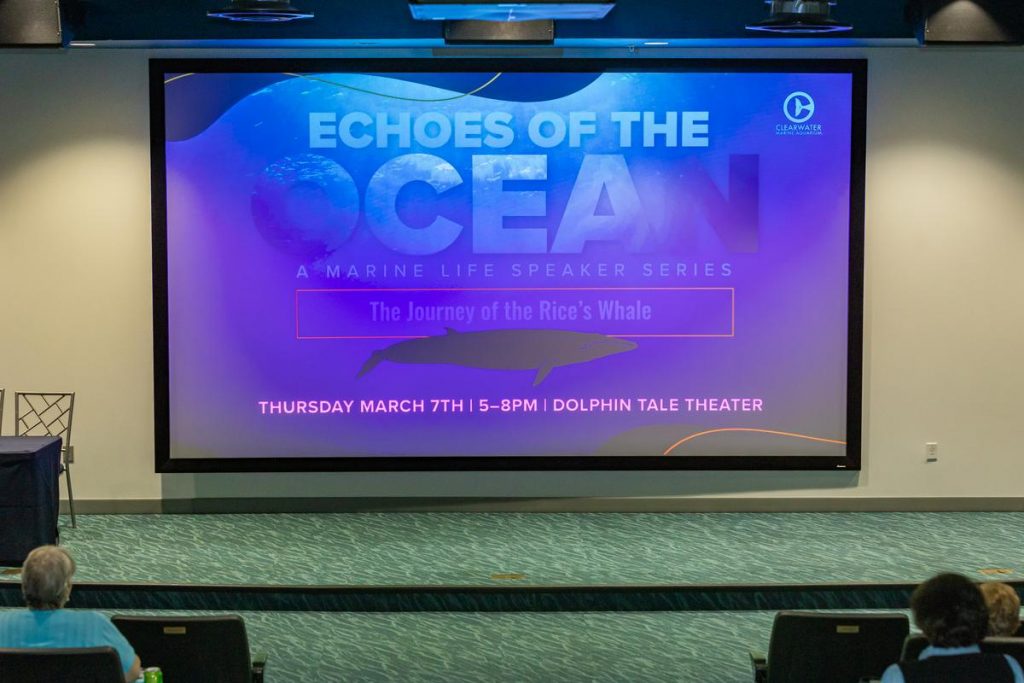
The Journey of the Rice’s Whale
Thursday, March 7, 2024 · 5:00 pm to 8:00 pm
This first event will feature the fascinating story of a newly discovered species of whale found in the Gulf of Mexico, formally named the Rice’s whale in 2021. After years of research, scientists used genetic and morphological evidence to determine that the Rice’s whale is a distinct species. The Rice’s whale is one of the most critically endangered species in the world with fewer than 100 individuals remaining.
Clearwater Marine Aquarium | Dolphin Tale Theater
Rice’s Whales – Navigating Towards Recovery
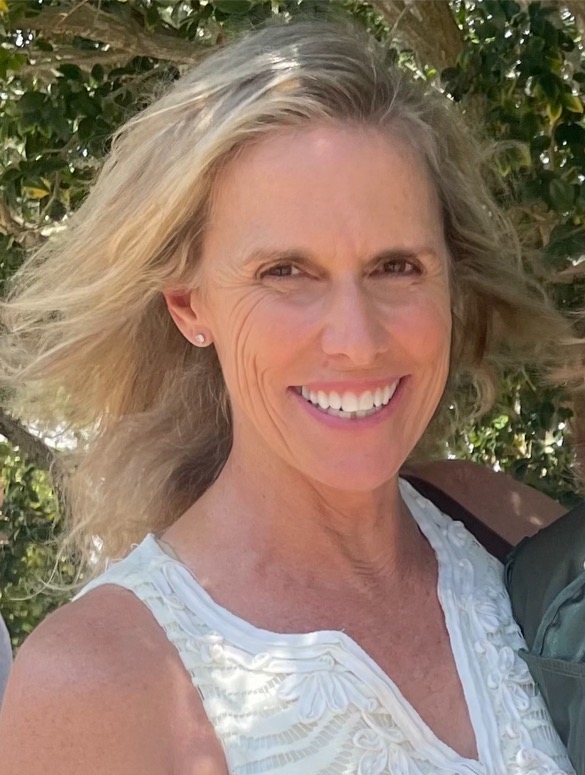
Laura Engleby
Chief, Marine Mammal Branch – NOAA Fisheries Southeast Region
Laura has over 35 years of experience working with marine mammals at the intersection of policy and science. She is the Chief of the Marine Mammal Branch for the Protected Resources Division at NOAA Fisheries Service, Southeast Regional Office (SERO), based in St. Petersburg, Florida. Her responsibilities include recovering endangered species such as North Atlantic right whales and Rice’s whales, working collaboratively with stakeholders to reduce human impacts to marine mammals, administering the Marine Mammal Health and Stranding Response Program and fostering conservation for marine mammals throughout the southeastern US.
From “Save the Whales” to “Save the Rice’s Whale”: A History of Modern Smithsonian Whale Conservation
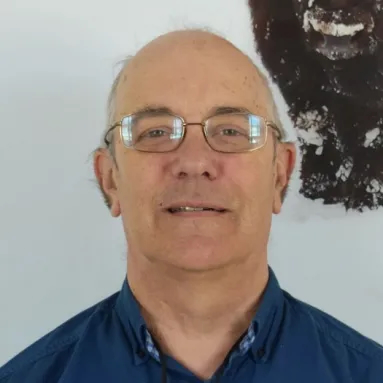
John Ososky
Museum Specialist, Division of Mammals, National Museum of Natural History
John Ososky was a baker the first half of his adult life. He received a BS in Wildlife Biology from Humboldt State University in California in 1994 and an MS in Biological Sciences from Northern Illinois University. John worked for the Smithsonian’s National Museum of Natural History from 1998 through 2023 with a focus on managing marine mammal collections; he has processed some 1,500 specimens of marine mammals, mostly cetaceans and seals. He is currently an associate of the Bonehenge Whale Center in Beaufort NC.
The Journey to the Future Holotype: A Story of Partnership
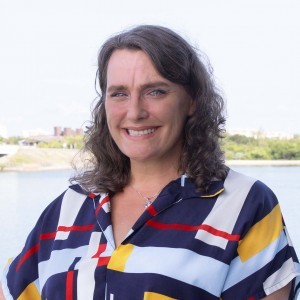
Gretchen Lovewell
Program Manager Stranding Investigations, Mote Marine Laboratory
Ms. Gretchen Lovewell is the Program Manager for Mote Marine Laboratory’s Stranding Investigations Program. She has been active in the stranding network since 1999 where she was a student at University of North Carolina Wilmington. Gretchen has been in a leadership role since 2003, first as North Carolina state stranding coordinator for NOAA Fisheries from 2003-2009, and Mote’s Program Manager since 2009. Gretchen has responded to over 40 different species of marine mammals and sea turtles through hundreds of stranding responses, necropsies (animal autopsies), and rescues. In addition to her stranding work, Gretchen manages the Ruth DeLynn Cetacean Osteological Collection. Gretchen has participated in aerial and vessel surveys for marine mammals, is a Level 3 first responder for large whale disentanglement and has participated in multiple dolphin health assessments. This work has led to several collaborations on peer-reviewed scientific papers, presentations, and reports.
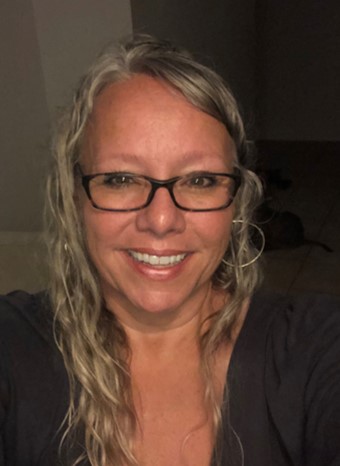
Denise Boyd
Associate Research Scientist, Florida Fish and Wildlife Conservation Commission Fish and Wildlife Research Institute
Denise Boyd, is an assistant research scientist with the FL Fish and Wildlife Conservation Commission’s marine mammal in Southwest FL. She has 29 years of experience responding to marine mammals and is a team lead for response and examination of large whale strandings throughout the Southeast region and other areas as needed.
Q&A Panelists
- John Ososky – Museum Specialist, Division of Mammals, National Museum of Natural History
- Laura Engleby – Marine Mammal Branch Chief, NOAA Fisheries Southeast Regional Office
- Gretchen Lovewell – Program Manager Stranding Investigations, Mote Marine Laboratory
- Denise Boyd – Associate Research Scientist, Florida Fish and Wildlife Conservation Commission Fish and Wildlife Research Institute
- Dr. James “Buddy” Powell – Chief Zoological Officer & Executive Director- CMA/CMARI
- Dr. Joy S. Reidenberg – Comparative Anatomist
Explore our ArtSEA Conservation exhibit!
Access exhibits on the 4th level, featuring our ArtSea Conservation exhibit during the evening.
Net proceeds from this event benefit Clearwater Marine Aquarium’s ongoing mission to rescue, rehab, and release more marine life.
Please Note:
- In order to purchase or consume an alcoholic beverage, guests must be 21 or older. Additionally, you will be required to present valid identification to verify your age.
- All prices and event details subject to change. Refunds are not available for special events. Late arrivals, cancellations, and no shows will not be refunded or rescheduled.
Dress attire is casual.
Please note that while we encourage a relaxed and comfortable dress code for this event, we kindly request that guests refrain from wearing bathing suits or any overly revealing clothing. We ask that appropriate clothing be worn to cover the torso and be suitable for public spaces. This may include items such as t-shirts, blouses, shorts, jeans, skirts, and dresses. Shoes or sandals are also required.
We reserve the right to refuse entry or ask guests to leave if their attire does not comply with our dress code policy. We appreciate your cooperation and look forward to a fun and enjoyable event for all.